


Organizer : Elsa Gallez (elsa.gallez@vub.be), for the CGIS group.
No registration needed. Possibility to join the seminar online via this link.
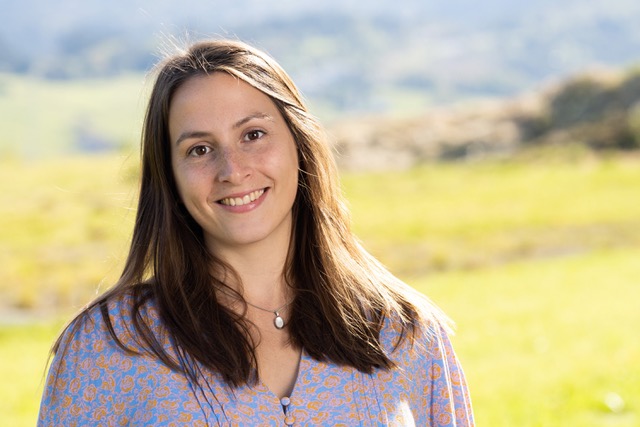
Celina Aznarez
Doctoral researcher at the Basque Center of Climate Change (BC3) and the Institute of Environmental Science and Technology (ICTA) – Autonomous University of Barcelona
Modelling supply-demand mismatches in ecosystem services for urban heat island mitigation and heat vulnerability
Abstract:
Land surface temperatures tend to be higher in densely built urban areas compared to suburban-rural borders, creating urban heat islands (UHIs) which have become one of the main environmental hazards for city dwellers. Impacts range from heat mortality, air quality degradation and exacerbated heat stress on biodiversity and ecosystems. However, due to the heterogeneous nature of urban landscapes and socio-spatial inequities driving landscape attributes like impervious surfaces and vegetation cover, UHI burdens are not evenly distributed. To mitigate UHIs, urban green infrastructure (UGI) can provide critical ecosystem services. Therefore, to understand the relationship between users' access and dependence on these benefits, we propose an approach integrating remote sensing, field and socio-demographic data with Artificial Intelligence for Environment and Sustainability (ARIES) and GIS tools. This approach includes: i) indicators of UHI exposure and urban heat vulnerability indices; ii) spatial quantification of the supply and demand of UGBS related to ecosystem services for UHI mitigation; iii) spatially explicit (mis)matches of ecosystem services supply and demand balance; iv) coupled modelling; and v) considerations for management and decision-making. In this presentation, we will focus on the progress made in these components, along with preliminary results.
Biography:
Celina holds a Licentiate degree in Environmental Management from the University of the Republic (Uruguay). She is interested in the connection between urban ecological quality to well-being and its feedback on environmental inequalities. In 2020, she was awarded an INPHINIT fellowship from the “La Caixa” foundation (2020) to join the Basque Centre for Climate Change (BC3) and ICTA-UAB to develop her PhD thesis. In her doctoral research, she explores the biodiversity contributions sustaining urban green infrastructure multifunctionality in ecosystem services provision through the lens of environmental justice.
In previous research, she addressed the socio-cultural valuation and distribution of ecosystem services in a gentrified coastal landscape in Eastern Uruguay, for which she obtained the first prize for the (degree) thesis category, in the National Urbanism Prize (2019), awarded by the Uruguayan Ministry of Housing, Territorial Planning and Environment.
Her latest publication is: “Aznarez, C., Svenning, J. C., Taveira, G., Baró, F., & Pascual, U. (2022). Wildness and habitat quality drive spatial patterns of urban biodiversity. Landscape and Urban Planning, 228, 104570.”

Dr Alessandra Manganelli
Research Training School “Urban Future-Making”, HafenCity Universität, Hamburg (HCU), University for the Built Environment and Metropolitan Development, Henning-Voscherau-Platz 1, 20457 Hamburg
Troubling the transformative potentials of Urban Climate Experiments: A Socio-Political and Justice-Oriented lens
Abstract:
In the midst of looming socio-ecological emergencies, not least the climate change challenge, urban climate experiments emerge as dominant tools for stirring more sustainable and, potentially, just urban transformations. Urban living labs, test-beds solutions, pilot projects, or bottom-up innovations in diverse urban planning fields have been proliferating across localities, engendering a veritable “experimental turn” in urban climate governance and planning. Yet, what emerges from the vast debate on experimentation is that the capacity of experiments to be radically transformative and to foster greater justice should not be taken for granted.
This presentation aims at conceptualizing and critically reflecting upon the transformative potentials of urban climate experiments. The conceptual lens of “governance tensions” will be mobilized to account for an actor-oriented view on potentials and struggles to effect change and to account for greater justice. While the presentation will be mostly conceptual and reflective, empirical insights from experiments in Italy - specifically in the context of Turin - will be provided.
Biography:
Dr. Alessandra Manganelli is an urban studies scholar with a background in urban governance and planning. Her doctoral research (KU Leuven, VUB, Belgium; Toronto Metropolitan University, Canada) has focused on the hybrid governance of urban food movements in Europe and North America. She has been a consultant for the Committee of the Regions on the European Farm to Fork Strategy (Brussels, 2019–20) and she recently published a book by Springer on Urban Food Movements.
Alessandra currently works as a post-doctoral researcher in the DFG-Research training group "Urban future-making" (HafenCity University, Hamburg). Besides food movements, her current research agenda deals with urban experimentation, urban climate governance, socio-ecological transformations, justice, with empirical focus in the contexts of Turin (Italy) and Barcelona (Spain).